


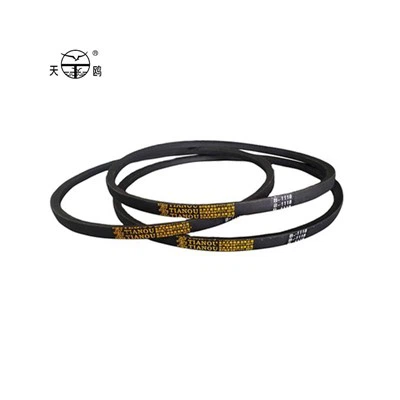
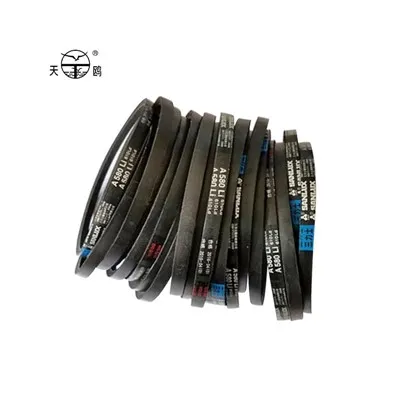
Rubber V Belt
Taizhou Tianou Rubber Co., Ltd. was founded in 2000, located in the eastern side of Tiantai National Scenic Area, has the reputation of "China Belt Industry City". Neighboring Shangshan Expressway, Yongtaiwen Expressway, 104 National Highway, the geographical location is superior, traffic is very convenient.
Why Choose Us?
Quality Products
We have advanced production and testing equipment, and our products meet various standards.
Rich Experience
We have years of industry experience and a team of experienced engineers and technicians to ensure consistent precision and high quality of our products.
Reliable Service
Our team is committed to providing reliable and consistent service, ensuring that you receive high-quality products and customer support from us every time.
Professional Team
The company is in possession of numbers of senior engineers and has abundant technique power, well conditioned equipment and technology comes to perfection.

Endless belt contains endless conveyor belt and Endless transmission belt. The strength of the core joint can reach 90% of the belt's body, and has no obvious defect on the surface. So the belt transports smoothly, and with low protraction. This belt's core is made of high quality cotton or polyester cotton canvas. which usually use 2-6 layers canvas to make into one belt.

Endless belt contains endless conveyor belt and Endless transmission belt. The strength of the core joint can reach 90% of the belt's body, and has no obvious defect on the surface. So the belt transports smoothly, and with low protraction. This belt's core is made of high quality cotton or polyester cotton canvas. which usually use 2-6 layers canvas to make into one belt.

Endless belt contains endless conveyor belt and Endless transmission belt. The strength of the core joint can reach 90% of the belt's body, and has no obvious defect on the surface. So the belt transports smoothly, and with low protraction. This belt's core is made of high quality cotton or polyester cotton canvas. which usually use 2-6 layers canvas to make into one belt.

Endless belt contains endless conveyor belt and Endless transmission belt. The strength of the core joint can reach 90% of the belt's body, and has no obvious defect on the surface. So the belt transports smoothly, and with low protraction. This belt's core is made of high quality cotton or polyester cotton canvas. which usually use 2-6 layers canvas to make into one belt.

Applicable Industries: Building Material Shops, Manufacturing Plant, Machinery Repair Shops, Farms, Retail, Construction works, Energy & Mining

Classcal wrapped v-belts feature high strength, low protraction, small matching tolerance and a fatigueendurance limit of over 10'times.

Applicable Industries: Building Material Shops, Manufacturing Plant, Machinery Repair Shops, Farms, Retail, Construction works , Energy & Mining

Applicable Industries: Building Material Shops, Manufacturing Plant, Machinery Repair Shops, Farms, Retail, Construction works , Energy & Mining

Endless belt contains endless conveyor belt and Endless transmission belt. The strength of the core joint can reach 90% of the belt's body, and has no obvious defect on the surface. So the belt transports smoothly, and with low protraction. This belt's core is made of high quality cotton or polyester cotton canvas. which usually use 2-6 layers canvas to make into one belt.
What Is Rubber V Belt
Rubber V belt has two kinds of special belt core structure and rope core structure, which are respectively composed of four parts: covering cloth, top rubber, tensile body and bottom rubber.
Rubber v belts have several advantages, including:
High Efficiency
Rubber v belts are known for their high power transmission efficiency, which means they can effectively transfer power from the driving pulley to the driven pulley with minimal energy loss.
Quiet Operation
Compared to some other types of belt drives, rubber v belts operate relatively quietly, making them suitable for applications where noise reduction is important.
Shock Absorption
V belts have the ability to absorb shock loads, which can help protect the connected machinery from sudden jolts or impacts.
Cost-effective
Rubber v belts are often more cost-effective compared to other types of mechanical power transmission systems, making them a popular choice in various industries.
Easy Installation And Maintenance
Rubber v belts are relatively easy to install and maintain, which can result in lower downtime and reduced maintenance costs for the equipment they are used with.
Types of Rubber Belt
Rubber belts are uniform bands made of both natural and synthetic rubber and are widely used in various applications. Rubber Belts are available in various sizes and shapes and used for multitude of purposes. These belts include a wide range of rubber belts. Rubber belts can be classified as :
Anti-static belts: They contain no static prone materials like carbon.
Twisted belts: They are used to replace endless round belts that are damaged or destroyed.
Multi-speed belts: They are used in variable speed applications such as automobiles and snowmobiles.
Armored belts: They have crosswise insertions in the cover, made of materials like steel. This is to decrease tearing by sharp conveyed objects.
Endless round belts: They are single piece belts. They are designed to stretch and do not require belt tension.
Fin belts: They have fin-like structures which are protruded from the belts themselves. They are useful in applications such as catching containers and moving them into boxes.
Cable belts: They are reinforced with cables.
Anti-vibration belts: They minimize vibrations in conveyor systems and the vibrations slowly abrade and stretch belts.
V-belts: They have a v-shaped profile having different variations of the v-belt.
Top Causes of Rubber V Belt Failure
Rubber V belts are a low maintenance solution which are suitable for mid to high power belt drives, delivering a high level of efficiency. This makes rubber V belts amongst the most common components in modern machinery, found in almost every industry, from agriculture to pharmaceuticals.
Visually examine your rubber V belts to check for any of the below symptoms to combat premature failure and unplanned downtime:
Rapid Sidewall Wear
Although side wall wear is inevitable over time, rapid sidewall wear can be a sign of a bigger problem, as most commonly it can be attributed to worn or damaged pulleys. However, there are many other possible influencing factors such as: using belts in extreme heat, excessive oil, grease, moisture and other generally abrasive environments can also cause this type of wear.
Solution: Ensuring pulleys are replaced when changing belts is important to be certain that you are getting the most from your belt systems. If the pulley wall is bright and shiny then it's time to replace it.
Worn Cover on Back
Most commonly, back wear is a direct cause of the belt being forced or pried on to the pulley or that there is some misplaced slack within the belt which is causing damage by vibrating against the idler during operation. Although, on some occasions defective or worn backside idlers can contribute to worn backside covers, although this is less common.
Solution: Making sure that your belts have the correct tension on installation is essential. Even belts that are measured correctly and considered 'fit and forget' need to be re-tensioned within 24-48 hours of installation.
Belt Soft, Swollen
Excessive exposure to oil or grease can be a recipe for disaster for some rubber V belts as these products can cause belts to soften and become swollen, and thus no longer fitting properly into the pulley groove. This sort of problem could also be similarly attributed to the use of belt dressing.
Solution: If belts are working in extreme conditions, likelihood is that it's not reaching its full potential. A simple belt guard can prevent foreign bodies including oil & grease from contaminating the drive, while it's always worth noting that belt dressings are to be avoided.
Belt Slips, Squeals (Spin Burn)
Spin burn can be cause by worn or damaged pulleys, and incorrect tensioning, which can wreak havoc on your belts causing damage and ultimately, premature failure. This can also be less commonly caused by using the wrong belt cross-section or type, excessive oil, excessive grease or moisture and insufficient wrap on a small pulley.
Solution: This type of wear means it's time to check your pulleys and belt tension as under tensioned belts and smooth pulleys mean unnecessary wear. You may well find that you need new pulleys or to re-tension your rubber V belt.
Split Belt Cover
There's a lot to be said about the damage that can be caused from forcing a belt onto a pulley or running your rubber V belts with the incorrect tension, as this is the most common cause for many types of belt damage, including cover splits.
Solution: If you're sure that there are no foreign objects in the grooves that could be causing the issue, then ensuring regular belt tensioning and that the correct size belts are ordered every time, you can help to avoid this issue.
Underside Cracked
Cracking in belts can cause serious issues, particularly if they are left untreated as they can affect drive efficiency and eventually cause belt failure. Cracks commonly begin to appear on belts that are being exposed to excessive heat. Although it cannot always be exclusively attributed to this, as pulleys and backside idlers that are too small or misaligned can also cause this cracking.
Solution: If your rubber V belts are working in extreme temperatures, it may be time to consider an rubber belt, that is designed to be able to withstand these temperatures without premature or unnecessary failure.
Missing Cogs
Missing cogs can cause belts to slip and fail, when it is discovered there are teeth missing, the belt should be changed immediately. The most common reasons your belt could be missing a cog are excessive heat, the pulleys are too small or misaligned. It can also be caused by improper or prolonged storage of belts.
Solution: Once again, if your cogged rubber V belts are working in extreme temperatures, it may be ideal to consider belts designed for these environments. Additionally, establishing that your pulleys are correctly aligned using a laser alignment tool can eliminate the possible cause and improve machine running.
Cracked Bushings
Having cracked bushings means your drive is in dangerous territory, if the damage becomes too severe, your pulleys may not be attached securely to the shaft. Bushings can become cracked due to excessive tension from the drive or using worn or damaged pulleys.
Solution: Over-tensioning belts can be just as damming to your rubber V belts as under-tensioning, using a belt tension gauge to check belt tension can help you avoid unnecessary bushing damage.

Rubber v-belts are the standard for most industrial needs. This flexible material makes up the core of the belt, providing it with the elasticity needed to bounce back from incredible tension and force. This, layered with steel tension cords and lined with a fabric cover, make one of the strongest general-use belts you can have. Here's some additional information to know about this type of v-belt.
Since rubber v-belts have the classification of an "industry standard" belt, their applications most often align with industrial procedures. This includes running lathes, light-duty milling machines, drills, and power tools. For these uses, the belt's core function is the transfer of power between driver pulleys. So, it will often work in its own isolated system, free from external forces. This ensures optimal performance and helps preserve the component for longer.
Maintenance Tips for Rubber V Belt
The primary goal for a regular belt maintenance program is to make sure all belts are installed properly and are running every motor at peak efficiency. The other goal is to do everything possible to extend the life of your V-belts. To get started, you'll need to conduct an audit of every motor in the facility, their location and purpose. Then look at each for some basic problems. First, make sure all of the right belts are installed. It may sound simple, but if it was ever common practice at your plant to replace belts with anything available, this is an immediate fix you can easily identify. When conducting your initial assessment, make sure every motor has the right belt installed for that application. Also check to make sure pulleys are in alignment and all belts are properly tensioned.
Common operating problems for belt-driven equipment include improper tension and alignment. The worn sheaves that result from these problems will reduce system efficiency, while adding to maintenance costs. When installed properly, rubber V beltdrives can run at a peak efficiency of 95% or higher, but efficiency can deteriorate by as much as 5% due to slippage if the belt is not periodically checked.
If a belt is not tensioned properly, or is too loose or too tight, it can lead to inefficient power transmission, belt wear, belt failure and sometimes even premature motor failure. A rubber V beltthat is over-tensioned can reduce the bearing life of the motor and is one of the leading causes of rubber V beltfailure. To combat tensioning problems, your maintenance shop should stock an arsenal of tools including a rubber V belttension checker to measure rubber V beltdeflection and tension and a belt frequency meter to find the natural vibration frequency of a belt strand so you can closely monitor belt tension. The device also calculates the corresponding belt tension.
Safety should be the top priority when installing, maintaining or replacing V-belts on electric motor drives. There is always the potential for injuries from sharp objects, extreme temperatures, high-speed abrasions, pinch points, confined spaces, unexpected movement and blunt-force injuries from excessive force or uncontrolled release of belt tension. Other hazards include unbalanced loads, airborne objects, inadequately secured pulleys and loose bushings and screws. You can avoid some of these hazards in well-organized, well-lit work area with little clutter. Before doing any inspection or maintenance on belt drives, turn equipment off and lock out the power source.
Before replacing V-belts, first confirm that the replacements are the correct size and the belt is the right match for the application. Belts to be installed on the same motor should be from the same manufacturer. Belts from different manufacturers may vary, with different stretch characteristics and coefficients of friction. Overloading will cause rapid wear and reduced belt life.
How to Tension a Rubber V Beltusing a Belt Frequency Meter
This method is recommended choice for rubber V belttensioning and time efficiency. Pristine accuracy will best help you achieve belt longevity, ultimately saving you money.
The first step is to load the belt's span and mass data into the meter. Mass data can be obtained from any belt manufacturer and varies between them.
Aim the sensor as close to the center of a selected belt span as possible in order to get the most accurate tension reading. The best practice is to orient the sensor with the long edge parallel to the belt centerline with approximately a ½˝ gap. Using too short of a span could yield false tension readings that may be much higher than the actual belt tension, due to the effects of belt stiffness.
If the top surface of the belt is not easily reachable, beaming the sensor against the edge of the belt functions equally as well.
Tap the belt, using the handle of a small tool or something similar, to make it vibrate for a reading. The meter will report the belt tension in units of force.
Improved Grip and Traction
One of the primary reasons V-belts are favored over flat belts is their superior grip and traction. V-belts have a V-shaped cross-section that fits into matching V-groove pulleys. This design allows for a more secure and efficient power transmission by increasing the contact area between the belt and the pulley. The V-shape prevents lateral movement and slippage, ensuring that power is transferred with minimal loss, even under high torque or load conditions.
Power Transmission Efficiency
The improved grip and reduced slippage of V-belts lead to higher power transmission efficiency compared to flat belts. Flat belts are more prone to slip, especially under heavy loads or when subject to sudden accelerations or decelerations. V-belts, with their better grip and trapezoidal shape, are better equipped to handle these situations, ensuring that the power transfer remains consistent and efficient.
Increased Load-Carrying Capacity
V-belts are generally capable of carrying heavier loads than flat belts. The V-shaped design of V-belts allows for a higher load-carrying capacity due to the increased friction and contact area with the pulley. This makes V-belts a preferred choice in applications where heavy loads or high torque are involved, such as industrial machinery and large conveyor systems.
Alignment and Tracking
V-belts are inherently better at maintaining alignment and tracking. The V-groove pulleys guide the belts and prevent lateral movement, ensuring that the belt stays in place. This alignment characteristic reduces wear and tear on the belt and pulleys, extending their lifespan.
Versatility and Adaptability
V-belts are highly versatile and can be used in various applications, including those that require different speeds, loads, and power transmission requirements. The availability of different V-belt sizes, materials, and configurations allows users to adapt the belt drive system to their specific needs. This adaptability makes V-belts suitable for a wide range of applications, from small-scale machinery to heavy industrial equipment.
Low Maintenance Requirements
V-belts generally have lower maintenance requirements compared to flat belts. Properly tensioned V-belts can run for extended periods without the need for frequent adjustments. The alignment characteristics of V-belts also reduce the wear and tear on the belts and pulleys, contributing to their longevity.
Space Efficiency
V-belt drive systems are often more space-efficient compared to flat belt systems. The V-groove pulleys can be placed closer together, which is advantageous in applications with limited space. This compact design is particularly useful in modern machinery and equipment where optimizing space utilization is a priority.
Flat belts, with their wider flat surfaces and potential for misalignment, may require more space between pulleys, limiting their application in confined spaces.
Noise Reduction
V-belts produce less noise compared to flat belts. The V-groove pulleys guide the belts smoothly, reducing vibrations and noise levels. This characteristic is valuable in applications where noise reduction is essential for a more comfortable and safer working environment.
Resistance to Environmental Factors
V-belts, especially when made from modern materials like neoprene or thermoplastic compounds, exhibit greater resistance to environmental factors such as heat, oil, and chemicals. This makes them suitable for a broader range of applications, including those in harsh or challenging environments.
Enhanced Safety
The reduced risk of belt slippage in V-belt drive systems enhances safety in various applications. Unintended slippage in industrial machinery or automotive engines can lead to accidents and injuries. The dependable grip of V-belts helps mitigate these risks.
Availability and Support
V-belts benefit from a well-established and extensive industry infrastructure, including manufacturers, suppliers, and service providers. This availability ensures that V-belt components, including belts, pulleys, and accessories, are readily accessible, reducing downtime in case of component failure.
Our Certificate


FAQ
Q: Which rubber is used in V-belt?
Q: What is the purpose of the V-belt?
Q: Why do V-belts break?
Q: How long do V-belts last?
Q: Which is better V-belt or gear belt?
Q: Why V-belt is preferred over flat belt?
Q: Why are V-belts better?
Q: What are the advantages of V-belt?
Q: Does a V-belt require more tension than a synchronous belt?
Q: Why do you think that the V-belt is the most popular belt form for power transmission?
Q: Why do V-Belts crack?
Q: Do V-Belts need lubrication?
Q: Which is better V-belt or gear belt?
Q: How do I know if my V-belt is bad?
Q: Do V-belts stretch over time?
Q: Do V-belts get hot?
Q: How efficient are V belts?
Q: Do V belts slip?
Q: What is the difference between belt drive and V-belt drive?
Q: What is the mechanical advantage of a belt?
Hot Tags: rubber v belt, China rubber v belt manufacturers, suppliers, factory, cargo conveyor belt, Heat and Oil Resistant Rubber Conveyor Belt, SPC Narrow V Belt, endless Conveyor belt drive, Triangle Belt, rubber coated v belt
Previous
Automotive V-beltsNext
E Normal V BeltYou Might Also Like



Send Inquiry