


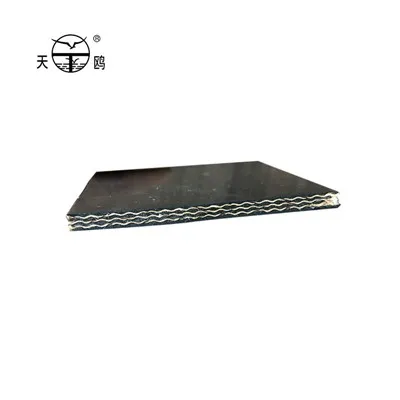
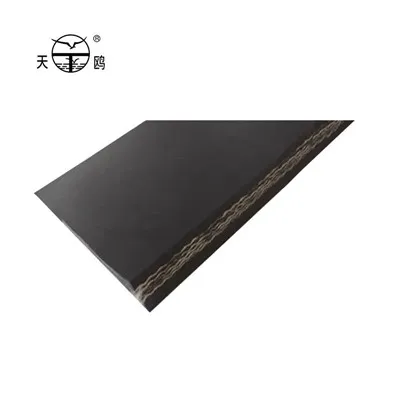
Heat And Oil Resistant Rubber Conveyor Belt
Taizhou Tianou Rubber Co., Ltd. was founded in 2000, located in the eastern side of Tiantai National Scenic Area, has the reputation of "China Belt Industry City". Neighboring Shangshan Expressway, Yongtaiwen Expressway, 104 National Highway, the geographical location is superior, traffic is very convenient.
Why Choose Us?
Quality Products
We have advanced production and testing equipment, and our products meet various standards.
Rich Experience
We have years of industry experience and a team of experienced engineers and technicians to ensure consistent precision and high quality of our products.
Reliable Service
Our team is committed to providing reliable and consistent service, ensuring that you receive high-quality products and customer support from us every time.
Professional Team
The company is in possession of numbers of senior engineers and has abundant technique power, well conditioned equipment and technology comes to perfection.

Cotton canvas woven by cotton fibers both in warp and in weft, its elongation is relatively low. It is good in mechanical fastening and adhesion with rubber.Converyor belt has relativly small deformation under high tempe rature conditions. It is suitable for short distance and light-load transportation of materials.

Fabric Cotton Polyester Conveyor Belt
Cotton canvas woven by cotton fibers both in warp and in weft, its elongation is relatively low. It is good in mechanical fastening and adhesion with rubber. Converyor belt has relativly small deformation under high tempe rature conditions. It is suitable for short distance and light-load transportation of materials.

Polyester Cotton T.C-56 Conveyor Belt
Cotton canvas woven by cotton fibers both in warp and in weft, its elongation is relatively low. It is good in mechanical fastening and adhesion with rubber. Converyor belt has relativly small deformation under high tempe rature conditions. It is suitable for short distance and light-load transportation of materials.

Cotton canvas woven by cotton fibers both in warp and in weft, its elongation is relatively low. It is good in mechanical fastening and adhesion with rubber. Converyor belt has relativly small deformation under high tempe rature conditions. It is suitable for short distance and light-load transportation of materials.

Heat and Oil Resistant Rubber Conveyor Belt
Cotton canvas woven by cotton fibers both in warp and in weft, its elongation is relatively low. It is good in mechanical fastening and adhesion with rubber. Converyor belt has relativly small deformation under high tempe rature conditions. It is suitable for short distance and light-load transportation of materials.

Cotton canvas woven by cotton fibers both in warp and in weft, its elongation is relatively low. It is good in mechanical fastening and adhesion with rubber. Converyor belt has relativly small deformation under high tempe rature conditions. It is suitable for short distance and light-load transportation of materials.

Cotton canvas woven by cotton fibers both in warp and in weft, its elongation is relatively low. It is good in mechanical fastening and adhesion with rubber. Converyor belt has relativly small deformation under high tempe rature conditions. It is suitable for short distance and light-load transportation of materials.

2-10 Layer Pattern Ring Type Belt
Endless belt contains endless conveyor belt and Endless transmission belt. The strength of the core joint can reach 90% of the belt's body, and has no obvious defect on the surface. So the belt transports smoothly, and with low protraction. This belt's core is made of high quality cotton or polyester cotton canvas. which usually use 2-6 layers canvas to make into one belt.

No Joint Pattern Ring Type Belt
Endless belt contains endless conveyor belt and Endless transmission belt. The strength of the core joint can reach 90% of the belt's body, and has no obvious defect on the surface. So the belt transports smoothly, and with low protraction. This belt's core is made of high quality cotton or polyester cotton canvas. which usually use 2-6 layers canvas to make into one belt.
The oil resistance conveyor belt refers to the ability of rubber vulcanizes to resist oil turbidity. When the surface of the rubber conveyor belt is in contact with various oils within a certain temperature range for a long time, the oil may penetrate into the rubber, causing volume increase and swelling. At the same time, the oil medium may react from the soluble compounding agents (mainly low molecular weight plasticizers) in the conveyor belt, resulting in a reduction in volume (shrinkage). The two are a dynamic balancing process. Usually, the degree of swelling or shrinking increases with the contact time between the surface of the rubber conveyor belt and the oil, until the volume change reaches equilibrium. The higher the temperature, the shorter the time required to reach volume equilibrium. In addition, some additives in oil products may chemically react with rubber molecules, causing cross-linking or degradation of rubber.
What Is the Difference Between Heat-Resistant Conveyor Belts and Fire-Resistant Conveyor Belts
In the realm of conveyor belts, we often encounter two distinct types: heat-resistant conveyor belts and fire-retardant conveyor belts, are these two types the same? If not, what sets them apart, and where are they respectively employed?
Heat-Resistant Conveyor Belts
Heat-resistant conveyor belts are specifically designed for use in high-temperature environments, they consist of a structure comprising heat-resistant layers, transition layers, heat-resistant EP carcass layers, and heat-resistant skim layers.
The principle behind heat-resistant conveyor belts involves the formation of a micro-porous carbonized layer when the covering rubber encounters high temperatures. This layer exhibits resistance to burning and prevents the transfer of heat further into the belt, thereby protecting the strength of the belt's carcass EP layers, during the belt's operation, this carbonized layer develops irregular fine cracks, contributing to a cooling effect.
These belts are suitable for transporting materials such as hot coke, cement clinker, slag, and hot castings at temperatures up to 180°C. When using EPDM rubber, material temperatures can reach 200-300°C, with momentary spikes of up to 800°C.
According to DIN22102 standards, heat-resistant conveyor belts are categorized as follows:
T1: Resistant to test temperatures below 100 °C, with a maximum short-term operating temperature of 150 °C.
T2: Resistant to test temperatures below 125 °C, with a maximum short-term operating temperature of 170 °C.
T3: Resistant to test temperatures below 150 °C, with a maximum short-term operating temperature of 200 °C.
T4: Resistant to test temperatures below 175 °C, with a maximum short-term operating temperature of 250 °C.
It's important to note that due to the natural properties of rubber, strict usage conditions are required for heat-resistant conveyor belts, such as : Adequate ventilation, cooling measures, material temperatures not exceeding 5% of the design temperature, and avoiding material stoppages on the belt are essential to prevent significant reduction in belt lifespan or damage.
Fire-resistant Conveyor Belts
Fire-resistant conveyor belts find significant use in reducing the occurrence of fires in coal mines, both above and below ground. The complex working environment of underground coal mines, with factors such as coal dust and methane gas, necessitates caution. Given the flammable nature of the transported coal, the generation of electric sparks during transportation could lead to fires. Fire-resistant conveyor belts help minimize the possibility of static sparks and, even if they occur, these belts possess high fire-retardant properties, preventing ignition.
Fire-resistant conveyor belts incorporate fire-retardant agents in their rubber, these belts can burn when exposed to open fires, but they self-extinguish within 45 seconds after leaving the source of fire, preventing further spread. These belts do not generate static electricity or sparks when in motion and typically have a surface temperature not exceeding 200 °C, they are well-suited for underground transportation and are widely used in industries such as power generation, mining, metallurgy, and construction.
Effective selection of fire-resistant conveyor belts is crucial for managing fire hazards in coal mines. Currently, there are three main types of fire-resistant conveyor belts for coal mining: fabric-layer fire-retardant conveyor belts, steel cord core conveyor belts, and solid woven core conveyor belts. Among these, the fabric-layer fire-retardant conveyor belts, classified as the first category, enjoy widespread usage due to their strong fire-retardant properties, along with lower weight and costs.
Heat-resistant conveyor belts and fire-retardant conveyor belts are distinct types, heat-resistant belts are designed for high-temperature environments, offering resistance to burning and cooling effects. They are suitable for transporting high-temperature materials, on the other hand, fire-retardant belts are intended for use in flammable environments like coal mines, focusing on preventing fires and static sparks. Understanding their structural differences, functionalities, and applications is essential, as heat-resistant belts are tailored for high-temperature material transportation, while fire-retardant belts address fire hazards, particularly in industries like coal mining.

What Is Elongation in Rubber
Elongation in rubber refers to the deformation of the material when subjected to external force, expressed as the ratio of the deformation to the original length, usually in percentage. For example, if a rubber with a length of 100 millimeters is stretched to 110 millimeters, the elongation is 10%. The elongation in rubber is influenced by factors such as molecular structure, hardness, temperature, and humidity.
Elongation in rubber is also an important indicator of its material properties. Rubber with high elongation typically exhibits good elasticity and flexibility, allowing it to undergo significant deformation without immediate rupture. This property is particularly important in applications such as springs, seals, and rubber hoses.
What Is Elongation at Break in Rubber
Elongation at break (also known as elongation at fracture) in rubber refers to the maximum deformation the rubber sample undergoes before fracturing when subjected to tension, expressed as the ratio of the increased length to the original length, usually in percentage. It indicates the maximum extent of deformation the rubber can withstand before failure. The unit remains as a percentage (%).
For example, if the initial length of a rubber strip is 10 centimeters and it stretches to a length of 20 centimeters before breaking, the elongation at break is 100%, meaning the length doubles before fracture.
The full-thickness elongation at break of a rubber conveyor belt refers to the ratio of the length increase of the rubber sample when stretched to break in the direction of the overall thickness of the rubber material (including the EP layer) to the original length, usually expressed as a percentage. Unlike conventional elongation at break, full-thickness elongation at break takes into account the deformation of the rubber in the overall thickness direction. The unit is still percentage (%)
Elongation at break in the cover rubber of conveyor belts is a crucial indicator of the material's extensibility and toughness. Rubber with high elongation at break typically exhibits excellent stretching performance, able to undergo significant deformation under load without immediate fracture. This property is crucial in applications that undergo frequent stretching or twisting forces, such as conveyor belts, rubber bands, and rubber hoses.
The elongation at break and tensile strength of rubber conveyor belts are closely related. Only when the test sample is not destroyed during the stretching process can it indicate a higher elongation. Therefore, having a higher tensile strength is a necessary condition for achieving a high elongation at break. Additionally, the elongation at break decreases with increasing tensile stress and hardness, while it increases with increasing elasticity. Rubber with good molecular chain flexibility and high elasticity exhibits a higher elongation at break. Natural rubber (NR) is most suitable for producing products with high elongation, with the elongation at break increasing as the rubber content increases. When the rubber content is around 80%, the elongation at break can reach up to 1000%. Rubber that undergoes plastic deformation easily also exhibits a higher elongation at break, such as isobutylene-isoprene rubber (IIR), which can achieve a relatively high elongation at break.
Tensile strength in rubber is determined by material properties such as composition, manufacturing process, and temperature. Generally, higher tensile strength indicates better resistance to deformation and stability under tension.
The elongation at break decreases with increasing cross-linking density. Therefore, when manufacturing products with high elongation, the amount of vulcanizing agent and accelerator should be appropriately reduced. Reinforcing agents decrease the elongation at break, especially carbon black with small particle size and high structure, which causes a more significant decrease in the elongation at break. As the filler content increases, the elongation at break decreases. Increasing the amount of plasticizer can also achieve a larger elongation at break.
Generally, the elongation, elongation at break, and tensile strength of rubber conveyor belts specifically refer to the characteristics of the rubber cover layers, including the top rubber cover and bottom rubber cover. Meanwhile, the full thickness elongation at break refers to the overall properties of the conveyor belt, including the EP layer.
Elongation, elongation at break, and tensile strength are important indicators of the elasticity and durability of rubber materials in conveyor belts. Choosing the appropriate rubber material and processing techniques can effectively enhance the overall performance and service life of conveyor belts.
What Are the Key Properties of T1, T2, T3, T4 Heat-Resistant Conveyor Belts
In the technical description of conveyor belts, we often encounter T1, T2, T3, T4, and EPDM, which represent the performance of heat-resistant conveyor belts. What do these designations mean, and how are they different?
Heat-resistant conveyor belts are primarily used in industries such as steel plants, cement, coke, metallurgy, etc., for conveying materials including sintered ore, coke, cement clinker, and other high-temperature substances. The production process of heat-resistant conveyor belts involves multiple layers of EP fabric or steel cords forming the carcass layer, with heat-resistant rubber covering both sides, bonded together through high-temperature vulcanization. These belts are designed for use under conditions where material temperature does not exceed 800°C and belt surface temperature does not exceed 220°C.
The principle of heat-resistant conveyor belts lies in the fact that the covering rubber forms a microporous carbonized layer at high temperatures. This layer is burn-resistant and prevents the further transfer of heat into the belt body, thereby reducing internal strength. The carbonized layer, developed during belt operation, creates irregular fine cracks that contribute to the cooling effect on the belt.
Heat-resistant conveyor belts are categorized into four types:
● T1 type: Withstands a working temperature not exceeding 100°C, peak short-term operating temperature of 150°C.
● T2 type: Withstands a working temperature not exceeding 125°C, peak short-term operating temperature of 170°C.
● T3 type: Withstands a working temperature not exceeding 150°C, peak short-term operating temperature of 200°C.
● T4 type: Withstands a working temperature not exceeding 180°C, peak short-term operating temperature of 230°C.
Currently, T2-level heat-resistant conveyor belts are widely used in the market. These belts typically use ethylene-propylene-diene monomer (EPDM) rubber as the cover material due to its ease of availability and lower cost. T3-level usage is less common as it requires more specialized materials, such as partial butyl rubber or blends of ethylene propylene with polyolefins. T4-level heat-resistant conveyor belts are even rarer and mainly produced by a few manufacturers, typically using materials like epichlorohydrin rubber or blends of terpolymer and other polymers.
EPDM, in the context of heat-resistant conveyor belts, stands for Ethylene Propylene Diene Monomer. It is a copolymer of ethylene, propylene, and a small amount of non-conjugated diene. EPDM is a type of ethylene-propylene rubber known for its excellent resistance to ozone, heat, weathering, and aging due to its chemically stable saturated hydrocarbon main chain with unsaturated double bonds only in the side chains.
EPDM heat-resistant conveyor belts exhibit outstanding heat resistance and chemical resistance. The unique branched structure of EPDM is the key reason for its heat resistance, providing not only excellent mechanical properties but also superior insulation. According to international standards, EPDM conveyor belts can withstand temperatures up to 250 degrees Celsius, making them widely used for conveying and handling in high-temperature environments.
What's "kg/cm²" in Conveyor Belt and How Convert it into other Units


In the realm of conveyor belts, parameters such as 150 kg/cm²,180 kg/cm², 240 kg/cm², or 1000 kg/cm² are frequently encountered. What do these units represent, and what aspect of conveyor belt performance do they describe?
The unit kg/cm² denotes pressure, representing kilograms of force per square centimeter. This is a unit within the International System of Units (SI), also known as kilograms-force per square centimeter. In physics and engineering, kg/cm² is commonly used to describe the pressure of liquids or gases. In the context of conveyor belts, kg/cm² is often employed to express tensile strength, including the tensile strength of the cover rubber, the elongation of the EP (ethylene propylene) layer, and the tensile strength of the steel cord.
The tensile strength of the cover rubber and the strength layer refers to the maximum tensile force per unit area that the material can withstand when subjected to tension. This parameter directly impacts the load-carrying capacity, service life, and reliability of conveyor belts. Therefore, stringent requirements are placed on the tensile strength of the cover rubber and strength layer in the design and selection of conveyor belts.
However, due to the traditional and customary usage variations between metric and imperial systems, as well as among different countries and regions, there can be inconsistencies in the units used to describe conveyor belt tensile strength. This necessitates an understanding of some basic unit conversion relationships. Common pressure units in the conveyor belt industry include megapascals (MPa), pounds per square inch (psi), kilograms per square centimeter (kg/cm²), bars, and atmospheres (atm). The conversion relationships between these units are:
1 megapascal (MPa)=145 pounds/inch2 (psi)=10.2 kilograms/cm2 (kg/cm2)=10 bar (bar)=9.8 atmospheric pressure (at m)=1N/mm2
For example, a conveyor belt with a cover rubber tensile strength of 240 kg/cm² can be expressed as a standard of 24 MPa.
In practical applications, conveyor belts experience pressure from various sources, such as material weight, transmission power, environmental temperature, and humidity. The tensile strength of the cover rubber must be robust enough to ensure the conveyor belt performs well under diverse conditions.
How to Increase the Service Life of Rubber Conveyor Belts
Friends who use conveyor belts all know that the raw material of conveyor belts is rubber, and the aging of rubber is the aging of rubber and its products. The factors that cause rubber aging have the following four aspects.
Oxygen, oxygen reacts with the rubber molecules in the free radical chain reaction in the rubber, and the molecular chain is broken or excessively cross-linked, which causes the change of the rubber properties. The role of oxygen is one of the important reasons for rubber aging.
Heat, increasing the temperature reaction, thereby accelerating the oxidation reaction rate of rubber, which is a common aging phenomenon. In addition, it is easy to cause superoxide cracking under the action of stress.
Moisture, the effect of moisture has two aspects: rubber is wet, which is caused by the water-soluble properties of rubber and the ingredients such as water gluten. Especially under the alternating action of water immersion and atmospheric exposure, the destruction of rubber will be accelerated. But in some cases, moisture does not damage the rubber, and even has the effect of delaying aging.
Light, the shorter the light wave, the greater the energy. The damage to the rubber is the ultraviolet rays with higher energy. In addition to directly causing the rupture and cross-linking of the rubber molecular chain, ultraviolet rays generate free radicals due to the absorption of light energy, which initiates and accelerates the oxidation chain reaction process. Ultraviolet light acts as heating.
To improve the service life of the conveyor belt, the following should be done:
● The idler is generally used in the ambient temperature range of +40 ℃ to -10 ℃. For the occasions with dustproof, explosion-proof and anti-corrosion requirements and when the conveyor belt is conveyed reversibly, additional measures should be taken. Avoid the idler being covered by the material, causing the rotation to be ineffective, preventing the material from being stuck between the roller and the conveyor belt, pay attention to the lubrication of the moving parts of the conveyor belt, but do not contaminate the conveyor belt.
● Prevent conveyor belt load from starting.
● If the conveyor belt deviates, measures should be taken to correct it in time.
● When it is found that the conveyor belt is partially damaged, it should be repaired in time to prevent the damage from expanding.
● Prevent the conveyor belt from being blocked by racks, pillars or block materials, and prevent the conveyor belt from breaking and tearing.
Our Certificate


FAQ
Q: What is the temperature range of a heat resistant conveyor belt?
Q: What is heat resistant conveyor belt?
Q: Which grade of belt is used for temperature resistance?
Q: What is the heat resistance of a timing belt?
Q: What is heat resistant fiber?
Q: What is conveyor belt rubber?
Q: What is rubber belts?
Q: What material is used for conveyor belts?
Q: Are conveyor belts made of rubber?
Q: What is the function of rubber belt?
Q: What size belts are there in rubber conveyors?
Q: What is a conveyor belt called?
Q: What makes a good conveyor belt?
Q: What is the most common conveyor belt system?
Q: How thick is conveyor rubber?
Q: Why are drive belts made from rubber?
Q: How long does rubber belt life span?
Q: Do rubber belts stretch?
Q: Is a conveyor belt a pulley?
Q: What is the difference between conveyor and conveyor belt?
Hot Tags: heat and oil resistant rubber conveyor belt, China heat and oil resistant rubber conveyor belt manufacturers, suppliers, factory, rubber fan wrapped narrow v belt, A Normal V Belt, Width mm 300 2000 Cotton Polyester Conveyor Belt, No Joint Pattern Ring Type Belt, Wedge V Belt, Polyester Cotton T C 56 Conveyor Belt
Previous
No InformationYou Might Also Like






Send Inquiry