


Conveyor Belt
Taizhou Tianou Rubber Co., Ltd. was founded in 2000, located in the eastern side of Tiantai National Scenic Area, has the reputation of "China Belt Industry City". Neighboring Shangshan Expressway, Yongtaiwen Expressway, 104 National Highway, the geographical location is superior, traffic is very convenient.
Why Choose Us?
Quality Products
We have advanced production and testing equipment, and our products meet various standards.
Rich Experience
We have years of industry experience and a team of experienced engineers and technicians to ensure consistent precision and high quality of our products.
Reliable Service
Our team is committed to providing reliable and consistent service, ensuring that you receive high-quality products and customer support from us every time.
Professional Team
The company is in possession of numbers of senior engineers and has abundant technique power, well conditioned equipment and technology comes to perfection.


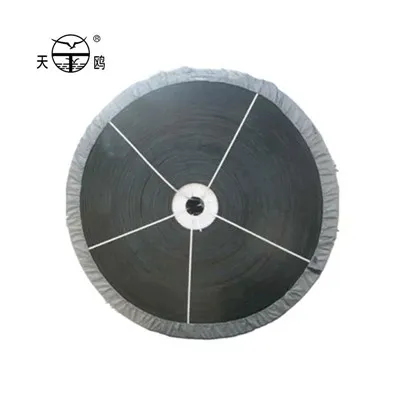
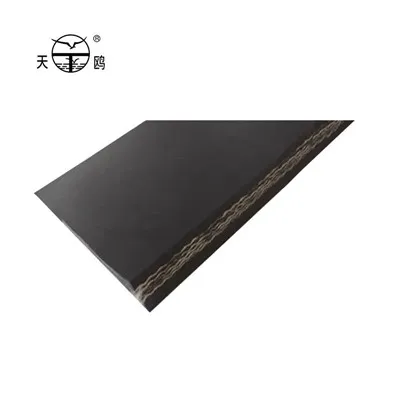
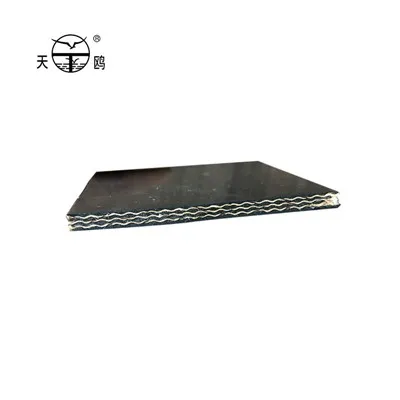


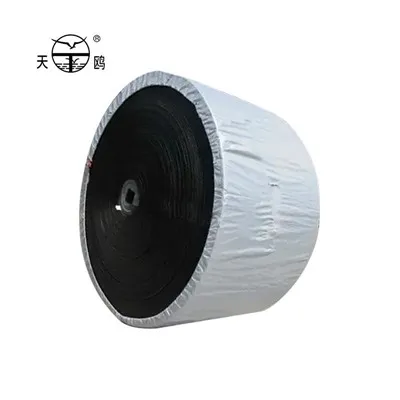
A conveyor belt is a looped belt that is driven by and wrapped around one or more pulleys. It is powered by an electric motor and supported by a metal plate bed or rollers upon which the conveyor belt rests. The pulley that powers a conveyor belt is referred to as the drive pulley and has an unpowered idler pulley.
Pulley drives at the discharge end of a conveyor belt are referred to as head drives, while ones located at the infeed end are known as tail drives. The preferred type of pulley drive is a head drive located at the discharge end and uses pull force to move a conveyor belt.
Conveyor belts resemble a band or loop of rollers connected to rotors powered by a motor. The belts can be as narrow as one inch (25 mm) or as wide as five feet (1.5 m), with plastic modular belts as wide as ten feet (3 m). Conveyor belts are made of highly durable and sturdy materials, much like heavy-duty machinery.
The design of the belt provides structure and traction for the movement of goods and materials.
Conveyor Belt Motors
The motor on a conveyor belt turns the pulleys that move the conveyor belt. A sufficient amount of friction between the belt and the pulleys will adhere the belt to the pulleys. The force of the conveyor motor rotates a drive pulley that moves the conveyor belt.
Conveyor Belt Pulleys
Pulleys are positioned at either end of the conveyor belt and near the drive motor. The drive pulley drives the conveyor belt and has external bearings driven by a motor and reducer. Pulleys are crowned with lagging to reduce belt slippage.
Return, idler, or tail pulleys redirect the conveyor belt back to the drive pulley, have internal bearings, and are located at the end of the conveyor bed or at both ends of the conveyor with a center drive. The purpose of tail pulleys is to provide tension in the conveyor belt.
Conveyor Belt Rollers
A conveyor belt is supported by a dead plate in the conveyor's frame. Rollers are used outside and underneath the conveyor to support the belt as it returns to the infeed. The center of the shaft of the rollers has a spring-retained axle used to install and remove it.
Conveyor Belt
There are endless types, sizes, shapes, angles, and materials for conveyor belts. In a conveying system, the design and type of conveyor belt determine how it functions, and it is fabricated to carry materials and products from one location to another.
Types of Conveyor Belts
The range and uses of conveyor belts cover several industrial settings and applications. The efficiency of conveyor belt systems assists in improving productivity, saves on labor costs, and decreases lead times. Conveyor belts move large quantities of goods quickly and reliably for transport, further assembly, or storage.
The principal reasons so many conveyor systems are in use are the savings in labor costs, efficient movement of goods, and protection of products and materials from damage.
Roller Bed Conveyor Belt
The surface of a roller bed conveyor belt consists of a set of rollers chosen to meet the needs of production requirements, such as speed, weight, and the type of products being moved. The length of a roller bed conveyor belt determines the number of rollers required. Roller bed conveyors are ideal for conditions needing increased weight capacity. The roller bed design minimizes the amount of friction transferred to the belt, allowing for smooth product movement.
Flat Belt Conveyor Belt
A flat belt conveyor belt uses a series of pulleys to move materials and supplies. Its belt is made of natural or synthetic materials; this makes it versatile and adaptable to varying conditions and applications. In some instances, a flat belt conveyor belt has a center drive and nose bars.
Modular Conveyor Belt
A modular belt conveyor consists of interlocked pieces made of hard plastic with segments that can be easily removed and replaced. The design of modular belt conveyors makes them easier to clean, and the material is resistant to sharp and abrasive substances. Modular belt conveyors come in varying configurations and use a single belt to go around corners, in a straight line, and up and down declines.
Cleated Conveyor Belt
Cleated belt conveyors have sections, pockets, or dividers that secure products when the belt declines or inclines. The cleats can be equally or unequally spaced and come in different styles and shapes, depending on the product and the design of the belt.
Curved Conveyor Belt
The curves in conveyor belts are used to carry products around corners, make transfers, and make efficient use of floor space. Curved conveyor belts can make "U" turns to face the direction from which they came. They are made with flat belts and can turn at 45°, 90°, 135°, and 180° angles.
Incline Conveyor Belt
There are several varieties of incline conveyor belts, with some having a rough, uneven surface while others have cleats to hold materials and prevent them from slipping or falling back. The underside of the belt has an even surface to allow the belt to glide smoothly along the bed. Modular conveyor belts can be used for this purpose. Cleats may be included for increased slippage prevention, depending on the moving material.
Decline Conveyor Belt
The purpose of a decline conveyor belt is to move products or materials down or change its height. As with the incline version of conveyor belts, a decline conveyor belt has a rough surface or cleats to prevent materials from slipping or falling. Decline conveyor belts are a continuous operating conveyor system with an articulated frame with a section that is pivoted or placed downward to accommodate the downward movement of products from an upper location.
Filter Conveyor Belt
Filter conveyor belts drain excess liquid from components or filter out toxins and contaminants. They are constructed with lateral grooves and holes in the center of the belt. Drainage holes are in a fabric-free zone down the center of the belt or sealed to prevent the liquid from soaking into the belt fabric. Much like a sidewall conveyor belt, filter conveyor belts can have sidewalls to prevent liquids and fluids from spilling over the sides of the belt. They are made of heated polyester, polypropylene, polyolefin, or stainless steel mesh for dewatering applications.
Timing Conveyor Belt
Timing conveyor belts are used for precision indexing and product placement. They are ideal for the positive placement of products regardless of the size of the product. Timing belt conveyors have a timing pulley and idler pulley with the timing belt looped around them. The teeth of the timing belt match the teeth of the pulleys with a support structure, conveyor frame, and support belt to hold the pulleys in place. Precision conveying and accurate placement of products differentiate timing belt conveyors from conveyor belts in general. Timing belt conveyors can have different spacing between their teeth, which can be rounded or trapezoidal.
Sandwich Conveyor Belt
A sandwich conveyor belt has two face-to-face belts, with one belt on top of the other to firmly hold materials. They have a rotating wheel for adjusting the pressure and gap between the belts. The materials to be moved are sandwiched between the two conveyor belts and hugged by the belts. The upper belt is not motorized and is moved by the force of the lower belt.
Anti-Static Conveyor Belt
Electrostatic charge on a conveyor belt can be created by friction between the belt and the bed, the movement of the conveyed product, or ionization in the air. In most cases, the static current is of low intensity but can cause problems if materials stick to the belt. Though the charge is very low, it may cause sparks, leading to hazardous conditions. Various devices can be installed on conveyor belt systems to dissipate and eliminate static charges. For example, anti-static belts might use carbon particles to make the belt anti-static or static-dissipative fabrics.
Conveyor belts are an essential component of modern-day assembly lines. They are used to move products from one location to another in a highly efficient and automated manner. The importance of conveyor belts cannot be overstated, as they play a critical role in ensuring that the assembly line runs smoothly.
Efficiency and Speed
One of the primary benefits of conveyor belts is their ability to move products quickly and efficiently. Compared to manual labor, conveyor belts can move products much faster, which can significantly increase production rates. Conveyor belts can also transport products to different locations, such as packaging stations or loading docks, without the need for additional handling.
Cost-Effective
Another advantage of conveyor belts is that they are cost-effective. While the initial investment in a conveyor belt system can be significant, the long-term benefits make it a worthwhile investment. Conveyor belts reduce the need for manual labor, which can save money on wages and benefits. They also require less maintenance than other forms of transportation, such as forklifts or trucks.


Safety
Conveyor belts are designed with safety in mind. They have built-in safety features, such as emergency stops and safety guards, to prevent accidents. Conveyor belts also reduce the risk of repetitive strain injuries, which can occur when workers perform the same manual tasks repeatedly.
Flexibility
Conveyor belts are highly flexible and can be customized to fit a wide range of applications. They can be designed to transport products of different shapes and sizes, and can be configured to move products vertically or horizontally. Conveyor belts can also be integrated with other systems, such as robotic arms or sorting machines, to further automate the assembly line.
Environmental Impact
Conveyor belts have a relatively low environmental impact compared to other forms of transportation. They consume less energy than forklifts or trucks, which can reduce carbon emissions. Conveyor belts also generate less noise pollution than other forms of transportation, which can improve working conditions for employees.
Conveyor belts are an essential part of modern-day assembly lines. They offer numerous benefits, including increased efficiency and speed, cost-effectiveness, safety, flexibility, and a reduced environmental impact. When choosing a conveyor belt system, it is important to consider your specific needs and requirements to ensure that you select the best option for your business.
How Conveyor Belts are Made
Regardless of the material used to produce a conveyor belt, all types are designed to move products, materials, supplies, and components efficiently and smoothly from one point to another. The type of product determines the type of conveyor belt and is the guiding aspect of conveyor belt selection.
Though there is a long list of materials used to make conveyor belts, all varieties fall into five categories: metal, plastic, rubber, fabric, and leather. There are subgroups and variations within each category.
Plastic Modular Conveyor Belts
Plastic conveyor belts are lightweight and temperature-resistant belts made of thermoplastics such as polyurethane, polyester, polyvinyl chloride, silicone, and polyethylene. To allow for bending, curving, and incline or decline motion, plastic conveyor belts have interlocking segments that give them the flexibility to move in any direction. Interlocked plastic conveyor belts are an alternative to metal and fabric belts.
Metal Conveyor Belts
Woven metal or plate conveyor belts are extremely strong, durable, rigid, and flat. Solid metal conveyor belts maintain their shape during their lifetime, while woven and linked conveyor belts will stretch and deform over time. Metal conveyor belts run in straight lines without curves, turns, or variations in their path. They are made from stainless steel, aluminum, or carbon steel and have exceptional longevity.
Rubber Conveyor Belts
Rubber has been a conveyor belt material for many years and is one of the more durable choices due to its abrasion resistance. The types of rubber used for conveyor belts include neoprene, nitrile, and styrene butadiene, all of which are reinforced with cloth fabric.
The durability of rubber makes it ideal for harsh conditions where abrasion resistance and impact absorption are necessary. The cloth reinforcement prevents the rubber from stretching and deforming.
Fabric Conveyor Belts
Fabric conveyor belts are a cost-effective choice for short conveying systems with lower capacity. The belt is made of several layers of synthetic fabrics that are specially treated to prevent elongation and have lengthwise polyester threads with crosswise polyamide threads. The combination of the two thread patterns provides an exceptional tensile strength-to-weight ratio, flexibility, and resistance to impact and chemicals. The top covers for conveyor belts are made of polyurethane (PU), polyvinyl chloride (PVC), and silicone. In addition, rubber cover grades are added to fabric conveyor belts to make the belts resistant to fire, heat, and wear.
Leather Conveyor Belts
Leather conveyor belts were the earliest form of conveyor belts and are still used today. They are known for their durability, shock resistance, and good gripping. For modern conveyor belts, leather is used for custom and hybrid conveying systems. As with all conveyor belts, leather belts come in various widths and thicknesses. They can be reinforced with various forms of material and coated to enhance their performance. Leather conveyor belts can perform all of the traditional tasks of a conveyor belt, including incline and decline product movement.
Uses for Conveyor Belts
Conveyor belts can be found in any industry that requires the movement of materials or supplies from one position in the facility to another. Conveying systems have become an essential part of all industrial operations regardless of their size. Their quick and efficient movement of products makes them an ideal solution for improving supply chain performance. Larger, more complex facilities use automated systems for efficiency, time saving, and productivity.
The uses for conveyor belts range from small conveyors used to move jewelry and precious stones to outdoor conveyors configured to move rocks, coal, and ore. It's very likely that a belt conveying system will be implemented for the rapid and economical movement of materials.
The various uses of conveyor belts can be broken into general and bulk material handling, food processing, and manufacturing and assembly operations.
Bulk Material Handling
Bulk conveyor belts are used to move a wide variety of products and raw materials, including sugar, oats, cereal, fruit, flour, screws, nut fasteners, and food nuts. They quickly and efficiently load and unload cement, sand, and gravel. In mining, coal, minerals, rocks, and stones are moved from open and closed pit mining operations. The varying lengths of conveyor belts make it possible to remove minerals and refuse.
Ship Loading and Unloading
Mobility is a crucial factor regarding the loading and unloading of ships. In the loading process, a belt conveying system unloads trucks and moves materials into the hold of a ship. For unloading, the process is reversed, and materials are moved from the ship and conveyed to trucks. Due to the unique nature of shipping and the different types of ships, loading and unloading belt conveyors are able to adjust to the height of the ship by telescoping.
Line Automated Assembly
Assembly operations have a series of conveyors that are custom-designed to fit the needs of the operation. As more and more assembly operations are using robotics and automated processes, belt conveying systems are being rapidly developed to meet the many computerized innovations and operational demands. The varieties of belt conveyors used for automated assembly lines include chain, slider, hinged, plastic belt, and pallet. The increasing demand for rapid and efficient material movement has necessitated the creation of new and unique belt conveyor configurations.
Luggage Transport
Belt conveyors are a necessary part of all airport operations in order to provide fast and efficient movement of packages, cargo, and luggage. For a belt conveying system to be successfully integrated into airport material handling, it must be able to meet the needs of all other handling and checking systems. The specifications for airport belt conveyor systems include reliability, silent operation, appealing appearance, safety, and ease of maintenance. Every airport belt conveyor system is tailored to meet the specific requirements of the airport's layout, including angles, flow rate, and one- or two-way operation.
Parts Belt Conveyors
Parts belt conveyors can move and transport any type of part regardless of size or design, including hot, oily, and pressed parts from forging machines that need to be loaded in hoppers, storage units, and drums. Piano hinges are used due to their durability, strength, and rigidity. In addition, the weight and density of the part loads necessitate that the belt is made of shock- and impact-resistant materials, with sidewalls to prevent part spillage.
Excavation Belt Conveyors
Excavation belt conveyors are designed to move earth and materials through small enclosed spaces such as windows, doors, and vents. Belt buckets are designed to handle loads of varying weights and have a high load capacity. Though excavation belt conveyors are capable of handling heavy loads, they can be easily maneuvered and positioned by two or three workers.
Before the advancement in technology, labor was used to transport material and goods in the manufacturing industry. People were responsible for carrying these products from one place to another using some kind of mobile transportation device. This method of transportation was susceptible to a number of risks namely deterioration of products, miss handling and many more.
However, with the developing technology new and better ways of transporting goods were developed. Among these new methods, conveyor belt system is the most cost-effective method of transporting goods and materials in the manufacturing industries. Physical labors require manpower which increases the liabilities. The conveyor belts have the ability to reduce the need for physical labor, eliminating the wages and increases the profit of the company. Due to their massive success, virtually every industry has started to incorporate this amazing system in their transportation regime.
Conveyor belts are divided into two main categories namely Steel cord belting and Fabric belting. They might have identical external features, but their internal structure differs. In Fabric belt, the inner layer that is made up of plastic web, cotton or mesh provides the tensile strength of the belt. On the contrary, a series of steel cables are a part of the steel cord belts. This series of steel belts are separated via a rubber. Different kinds of belts are used for different types of application. For example, the steel belts are used on escalators, moving sidewalks and similar manufacturing procedures.
Conveyor belts are the types of belts that are suspended with a continous loop of material that moves around them. They are used in a number of applications in the food processing, manufacturing and other heavy industries. Industries where these conveyor belt systems are excelling and they include automotive, computer, good, packaging, print finishing, bottling and canning, chemical, pharmaceutical, aerospace and food processing.
A number of things are being transported using these convey belts, but the most common include food items such as nuts and beans, grain and animal feed, wood and furniture, pills and powders, scrap and metal and automotive components.

Factors That Impact a Conveyor Belt's Performance
The design of a conveyor belt plays a crucial role in determining its productivity and overall performance. Several factors related to the design of a conveyor belt can impact its productivity:
Belt material
The choice of belt material affects the durability, flexibility, and friction of the conveyor system. The right material can improve the conveyor's efficiency, reduce maintenance requirements, and extend its lifespan. Common materials include rubber, PVC, fabric, and steel, each with its own advantages and limitations.
Belt width
The width of the conveyor belt determines the capacity of the system. Wider belts can handle more products or larger-sized items, thus increasing the productivity of the conveyor system. However, wider belts may require more energy to operate and might not fit in space-constrained environments.
Belt speed
The speed of the conveyor belt affects the throughput of materials, and faster belt speeds can increase productivity by moving more products per unit of time. However, excessively high speeds can lead to product damage, increased belt wear, and reduced operational safety.
Incline or decline
Conveyor belts can be designed to move materials uphill or downhill. The angle of incline or decline will impact the load-bearing capacity and the required power to move materials. Steeper angles may require specialized belts or additional support structures to maintain productivity without compromising safety.
Drive system and pulley design
The type and design of the drive system and pulleys determine the conveyor's torque, speed, and energy efficiency. A well-designed drive system can improve productivity by ensuring smooth and consistent belt movement.
Load support and idlers
Load support structures and idlers (rollers) help distribute the weight of materials on the belt and maintain proper belt tension. Properly designed load support and idler systems can reduce belt wear, minimize energy consumption, and ensure smooth operation, all contributing to higher productivity.
Accessories and modifications
Conveyor belt systems can be customized with various accessories, such as side guards, cleats, or belt scrapers, to improve performance in specific applications. These design features can help optimize productivity by preventing product spillage, improving traction, or facilitating the handling of unique materials.
System layout
The layout of the conveyor belt system, including its length, curvature, and integration with other equipment, can impact productivity. A well-designed layout can minimize material transfer points, reduce the risk of bottlenecks, and streamline the flow of materials through the production process.
How to Increase Your Conveyor Belt's Productivity
There are several strategies and improvements that can help increase the productivity of your industrial conveyor belt system. Some of these factors depend on the application, the material being transported, and the overall design of the belt.
Ensure your conveyor belt is well-maintained to prevent breakdowns and reduce wear. Regular inspections, timely lubrication, belt tension adjustments, and replacing worn-out parts can help maintain optimal performance and prolong the system's life.
Adjust the belt speed to balance productivity and safety. Faster speeds can increase throughput, but excessive speed may lead to product damage or safety issues. Experiment with different speeds to find the optimal balance for your specific application.
Consider upgrading to a more durable or better-suited belt material for your application. This can help improve efficiency, reduce maintenance, and extend the conveyor belt's lifespan.
Ensure that materials are evenly distributed on the conveyor belt to avoid overloading or imbalances that can reduce productivity. Utilize feeders, chutes, or other material handling equipment to optimize loading and distribution.
Reduce material spillage by using side guards, skirting, or sealing systems. This can help maintain a cleaner work environment, reduce maintenance, and improve overall productivity.
Review and optimize the conveyor system layout to minimize transfer points, reduce bottlenecks, and ensure a smooth flow of materials throughout the production process. This may involve reconfiguring the conveyor's path, adjusting incline or decline angles, or integrating other material handling equipment.
Add the conveyor belt parts and accessories, such as patented polymer endcap to protect bearings against moisture and contaminants.
Our Certificate


FAQ
Q: What is a conveyor belt?
Q: What uses conveyor belts?
Q: What is the term conveyor belt?
Q: What is an example of a conveyor belt?
Q: Why conveyor belt is used?
Q: What is the difference between conveyor and conveyor belt?
Q: What's inside a conveyor belt?
Q: What are the three types of conveyor belts?
Q: What is another word for conveyor belt?
Q: Where does the conveyor belt go?
Q: What is the most common type of conveyor?
Q: Is conveyor belt a hazard?
Q: Is a conveyor belt push or pull?
Q: What controls a conveyor belt?
Q: How do conveyor belts work?
Q: What type of rubber is used in conveyor belt?
Q: What is the head end of a conveyor?
Q: Is a conveyor belt a pulley?
Q: How quickly does the conveyor belt move?
Q: How long should a conveyor belt last?