


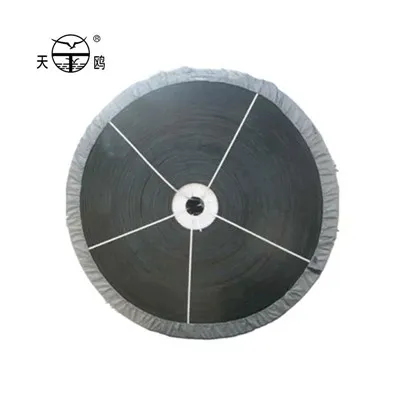
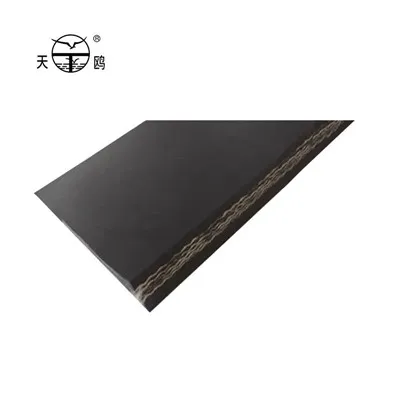
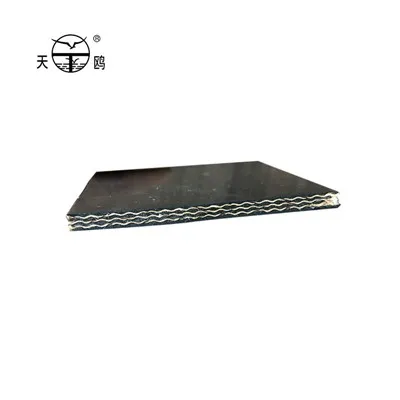
Flat Conveyor Belt
Taizhou Tianou Rubber Co., Ltd. was founded in 2000, located in the eastern side of Tiantai National Scenic Area, has the reputation of "China Belt Industry City". Neighboring Shangshan Expressway, Yongtaiwen Expressway, 104 National Highway, the geographical location is superior, traffic is very convenient.
Why Choose Us?
Quality Products
We have advanced production and testing equipment, and our products meet various standards.
Rich Experience
We have years of industry experience and a team of experienced engineers and technicians to ensure consistent precision and high quality of our products.
Reliable Service
Our team is committed to providing reliable and consistent service, ensuring that you receive high-quality products and customer support from us every time.
Professional Team
The company is in possession of numbers of senior engineers and has abundant technique power, well conditioned equipment and technology comes to perfection.

Cotton canvas woven by cotton fibers both in warp and in weft, its elongation is relatively low. It is good in mechanical fastening and adhesion with rubber.Converyor belt has relativly small deformation under high tempe rature conditions. It is suitable for short distance and light-load transportation of materials.

Fabric Cotton Polyester Conveyor Belt
Cotton canvas woven by cotton fibers both in warp and in weft, its elongation is relatively low. It is good in mechanical fastening and adhesion with rubber. Converyor belt has relativly small deformation under high tempe rature conditions. It is suitable for short distance and light-load transportation of materials.

olyester Cotton T.C-56 Conveyor Belt
Cotton canvas woven by cotton fibers both in warp and in weft, its elongation is relatively low. It is good in mechanical fastening and adhesion with rubber. Converyor belt has relativly small deformation under high tempe rature conditions. It is suitable for short distance and light-load transportation of materials.

Cotton canvas woven by cotton fibers both in warp and in weft, its elongation is relatively low. It is good in mechanical fastening and adhesion with rubber. Converyor belt has relativly small deformation under high tempe rature conditions. It is suitable for short distance and light-load transportation of materials.

Heat and Oil Resistant Rubber Conveyor Belt
Cotton canvas woven by cotton fibers both in warp and in weft, its elongation is relatively low. It is good in mechanical fastening and adhesion with rubber. Converyor belt has relativly small deformation under high tempe rature conditions. It is suitable for short distance and light-load transportation of materials.

Cotton canvas woven by cotton fibers both in warp and in weft, its elongation is relatively low. It is good in mechanical fastening and adhesion with rubber. Converyor belt has relativly small deformation under high tempe rature conditions. It is suitable for short distance and light-load transportation of materials.

Cotton canvas woven by cotton fibers both in warp and in weft, its elongation is relatively low. It is good in mechanical fastening and adhesion with rubber. Converyor belt has relativly small deformation under high tempe rature conditions. It is suitable for short distance and light-load transportation of materials.

2-10 Layer Pattern Ring Type Belt
Endless belt contains endless conveyor belt and Endless transmission belt. The strength of the core joint can reach 90% of the belt's body, and has no obvious defect on the surface. So the belt transports smoothly, and with low protraction. This belt's core is made of high quality cotton or polyester cotton canvas. which usually use 2-6 layers canvas to make into one belt.

No Joint Pattern Ring Type Belt
Endless belt contains endless conveyor belt and Endless transmission belt. The strength of the core joint can reach 90% of the belt's body, and has no obvious defect on the surface. So the belt transports smoothly, and with low protraction. This belt's core is made of high quality cotton or polyester cotton canvas. which usually use 2-6 layers canvas to make into one belt.
What Is Flat Conveyor Belt
The flat conveyor belt is the most common and simplest type of conveyor system. These belts are usually made from softer materials such as fabrics or rubber. They constantly flow in one direction, moving any material from one side of the conveyor to the other. They have no special qualities and therefore cannot carry any unique materials such as liquids. Since they are flat, there is a risk of material slippage if the conveyor is at an angle.
What Are Benefits of Flat Conveyor Belt
Flat conveyor belt offer several benefits in various industries. Some of these benefits include:
Efficiency: Flat conveyor belt can transport large volumes of materials quickly and efficiently, increasing productivity and reducing labor costs.
Versatility: They can be used to transport a wide variety of materials, such as bulk materials, small parts, and irregularly shaped items.
Safety: Flat conveyor belt are designed with safety features to prevent accidents and injuries, such as guards, emergency stops, and safety sensors.
Low maintenance: With proper care, flat conveyor belt require minimal maintenance, leading to reduced downtime and lower maintenance costs.
Cost-effectiveness: Flat conveyor belt are generally cost-effective to install and operate, making them a popular choice for material handling in many industries.
Automation: They can be easily integrated into automated systems, allowing for seamless material handling processes.
The range and uses of conveyor belts cover several industrial settings and applications. The efficiency of conveyor belt systems assists in improving productivity, saves on labor costs, and decreases lead times. Conveyor belts move large quantities of goods quickly and reliably for transport, further assembly, or storage.
The principal reasons so many conveyor systems are in use are the savings in labor costs, efficient movement of goods, and protection of products and materials from damage.
Roller Bed Conveyor Belt
The surface of a roller bed conveyor belt consists of a set of rollers chosen to meet the needs of production requirements, such as speed, weight, and the type of products being moved. The length of a roller bed conveyor belt determines the number of rollers required. Roller bed conveyors are ideal for conditions needing increased weight capacity. The roller bed design minimizes the amount of friction transferred to the belt, allowing for smooth product movement.
Flat Belt Conveyor Belt
A flat belt conveyor belt uses a series of pulleys to move materials and supplies. Its belt is made of natural or synthetic materials; this makes it versatile and adaptable to varying conditions and applications. In some instances, a flat belt conveyor belt has a center drive and nose bars.
Modular Conveyor Belt
A modular belt conveyor consists of interlocked pieces made of hard plastic with segments that can be easily removed and replaced. The design of modular belt conveyors makes them easier to clean, and the material is resistant to sharp and abrasive substances. Modular belt conveyors come in varying configurations and use a single belt to go around corners, in a straight line, and up and down declines.
Cleated Conveyor Belt
Cleated belt conveyors have sections, pockets, or dividers that secure products when the belt declines or inclines. The cleats can be equally or unequally spaced and come in different styles and shapes, depending on the product and the design of the belt.
Curved Conveyor Belt
The curves in conveyor belts are used to carry products around corners, make transfers, and make efficient use of floor space. Curved conveyor belts can make "U" turns to face the direction from which they came. They are made with flat belts and can turn at 45°, 90°, 135°, and 180° angles.
Incline Conveyor Belt
There are several varieties of incline conveyor belts, with some having a rough, uneven surface while others have cleats to hold materials and prevent them from slipping or falling back. The underside of the belt has an even surface to allow the belt to glide smoothly along the bed. Modular conveyor belts can be used for this purpose. Cleats may be included for increased slippage prevention, depending on the moving material.
Decline Conveyor Belt
The purpose of a decline conveyor belt is to move products or materials down or change its height. As with the incline version of conveyor belts, a decline conveyor belt has a rough surface or cleats to prevent materials from slipping or falling. Decline conveyor belts are a continuous operating conveyor system with an articulated frame with a section that is pivoted or placed downward to accommodate the downward movement of products from an upper location.
Filter Conveyor Belt
Filter conveyor belts drain excess liquid from components or filter out toxins and contaminants. They are constructed with lateral grooves and holes in the center of the belt. Drainage holes are in a fabric-free zone down the center of the belt or sealed to prevent the liquid from soaking into the belt fabric. Much like a sidewall conveyor belt, filter conveyor belts can have sidewalls to prevent liquids and fluids from spilling over the sides of the belt. They are made of heated polyester, polypropylene, polyolefin, or stainless steel mesh for dewatering applications.
Timing Conveyor Belt
Timing conveyor belts are used for precision indexing and product placement. They are ideal for the positive placement of products regardless of the size of the product. Timing belt conveyors have a timing pulley and idler pulley with the timing belt looped around them. The teeth of the timing belt match the teeth of the pulleys with a support structure, conveyor frame, and support belt to hold the pulleys in place. Precision conveying and accurate placement of products differentiate timing belt conveyors from conveyor belts in general. Timing belt conveyors can have different spacing between their teeth, which can be rounded or trapezoidal.
Sandwich Conveyor Belt
A sandwich conveyor belt has two face-to-face belts, with one belt on top of the other to firmly hold materials. They have a rotating wheel for adjusting the pressure and gap between the belts. The materials to be moved are sandwiched between the two conveyor belts and hugged by the belts. The upper belt is not motorized and is moved by the force of the lower belt.
Anti-Static Conveyor Belt
Electrostatic charge on a conveyor belt can be created by friction between the belt and the bed, the movement of the conveyed product, or ionization in the air. In most cases, the static current is of low intensity but can cause problems if materials stick to the belt. Though the charge is very low, it may cause sparks, leading to hazardous conditions. Various devices can be installed on conveyor belt systems to dissipate and eliminate static charges. For example, anti-static belts might use carbon particles to make the belt anti-static or static-dissipative fabrics.
Flat conveyor belt daily wear and tear, but vulcanized belt splicing may repair them once they fail. Because most operations utilizing conveyor belts depend on them to function, vulcanized belt splicing offers a great way to keep them moving. One of many types of splicing methods, vulcanized splicing closes ends of belts to make a strong, sturdy belt loop.
Belting should always hold through the lifespan of the materials involved. Vulcanized splicing helps to ensure that belting operations meet these lifespans and operate without error for the long term.
Vulcanizing a belt typically comes with three stages of processing:
Prepare Belt Ends Of Splicing
The first step comes with cutting the belt ends at correct angles to then strip them apart. This exposes piles within the carcass belt that the one performing the splicing uses to join the two ends together. With their precision, the belt's ends are formed into the perfect form without damaging the piles.


Application Of Adhesive Material
Whether the engineer uses cement, gum, or another adhesive material, they apply the material and belt piles intermittently to overlap them. This creates a strong hold of both bonding material as well as belt material.
Curing To Completion
Once applied, the preparer presses the bonding agent and belt together and cures the combination. Through heat, pressure, and/or time, a fully-realized belt becomes the end result. Whether they utilize hot or cold vulcanization for bonding, they achieve the same end result.
Main Types of Conveyor Belts for Various Industries
Solid, General-Use Conveyor Belts
This is a common type of conveyor belt for industrial applications and may be made of rubber or fabric. Solid, rubber conveyor belts are commonly used in mining and milling industries to handle raw materials and aggregates in bulk quantity. PVC conveyor belts are used at grocery stores while conveyor belts made of polyester, neoprene, or rubber are used for baggage handling at airports.
Plastic Interlocking Conveyor Belts
For industries that require regular cleaning and belt change such as food packaging and automotive, plastic interlocking conveyor belts are the preferred choice as it is designed for that type of environment. Fabric and metal belts may also be used to replace plastic belts.
Woven Metal Conveyor Belts
For industries that deal with cooling, drying, and heating processes, this is the type of conveyor belt to use. They are especially suited for the food manufacturing, electronics, and glass manufacturing sectors. Usually, they are made of interlinked chains or wiring which allows airflow while the product is carried.
Hinged Conveyor Belts
Made of metal, hinged conveyor belts are very sturdy and suit rigorous processes. They are used to handle scrap and small products for recycling. They have a flat and solid surface that rotates around the pulley through their interlocking hinges.
Filter Conveyor Belts
This type of conveyor belt is commonly used in water treatment industries to drain out excess fluids or toxins. Filter belts are the preferred type of conveyor belts as they allow particles to pass through a filter instead of being carried by the conveyor system.
The Evolution of Conveyor Belts: From ancient Times to Modern-day
Conveyor belts have been an integral part of the industrial revolution since its inception. The use of conveyor belts dates back to ancient times when they were used to transport materials in mines. However, the modern-day conveyor belt has undergone significant changes and improvements to become the backbone of the assembly line.
The Early Days
The earliest conveyor belts were made of leather, canvas, or rubber. These belts were manually operated and used to transport materials over short distances. They were mainly used in mines and ports to move heavy materials such as coal and grain. These belts were prone to wear and tear, and their efficiency was limited.
The Industrial Revolution
The industrial revolution marked a significant turning point in the history of conveyor belts. The introduction of steam power and electricity led to the development of more sophisticated conveyor systems. The first automated conveyor belt was introduced in the late 19th century. This belt was made of rubber and was powered by a steam engine. The conveyor belt was used to transport coal and other materials over long distances.
Modern-day Conveyor Belts
The modern-day conveyor belt is a highly sophisticated machine that is used in almost every industry. These belts are made of materials such as rubber, PVC, and nylon. They are powered by electric motors and can transport materials over long distances at high speeds. Modern-day conveyor belts are designed to be durable, efficient, and safe. They are equipped with sensors and other safety features that prevent accidents and ensure smooth operation.
Innovation and Advancements
With the advent of new technologies, conveyor belts have continued to evolve. Today, conveyor belts can be customized to meet specific needs and requirements. They can be designed to transport materials of different sizes, shapes, and weights. Conveyor belts can also be used in different environments, including extreme temperatures, wet and humid conditions, and corrosive environments.
The Future of Conveyor Belts
The future of conveyor belts looks promising. With advancements in technology, conveyor belts are expected to become even more efficient, safe, and environmentally friendly. The use of renewable energy sources such as solar power is also likely to become more prevalent in conveyor belt systems. The development of new materials and designs is expected to make conveyor belts more durable and cost-effective.
The evolution of conveyor belts has been a gradual process that has seen significant improvements over time. From the early days of manual operation to the modern-day automated systems, conveyor belts have become an essential part of the industrial revolution. With continued innovation and advancements, conveyor belts are expected to remain the backbone of the assembly line for many years to come.
Tips to Keep Your System Running Smoothly
The smooth operation of a conveyor belt system is essential for the efficient functioning of an assembly line. Conveyor belts are the backbone of the assembly line, and any breakdown can cause significant delays and losses. Therefore, it is crucial to keep the conveyor belts in top-notch condition to ensure a smooth and uninterrupted production process.
Regular Inspection and Cleaning
Regular inspection and cleaning of conveyor belts are essential to keep them running smoothly. Dirt, dust, and debris can accumulate on the belts, causing them to wear out faster. Therefore, it is crucial to clean the conveyor belts regularly to prevent this build-up. Inspection should also be done regularly to check for any signs of wear and tear. Any damages should be repaired promptly to prevent further damage.
Proper Lubrication
Lubrication is another crucial aspect of conveyor belt maintenance. Proper lubrication can help reduce friction, which can cause wear and tear on the belts. It is essential to use the right type of lubricant for the conveyor belts. The type of lubricant used will depend on the type of conveyor belt and the conditions it operates in. Over-lubrication should be avoided as it can attract dirt and debris, causing more harm than good.
Tension Adjustment
Proper tension adjustment is necessary for the smooth operation of a conveyor belt. The tension should be adjusted regularly to prevent slippage or stretching of the belts. Over-tensioning can cause excessive wear and tear on the belts, while under-tensioning can cause the belts to slip and cause delays.
Belt Alignment
Proper belt alignment is essential to ensure the smooth operation of a conveyor belt system. Misaligned belts can cause excessive wear and tear on the belts, resulting in frequent breakdowns. Proper alignment can also help prevent the belts from slipping or falling off the pulleys.
Replace Worn-out Parts
Worn-out parts should be replaced promptly to prevent further damage. Any damaged or worn-out parts, such as pulleys or bearings, should be replaced immediately. Delaying the replacement of worn-out parts can cause the belts to break down frequently, causing delays and losses.
Regular maintenance of conveyor belts is crucial for the smooth operation of an assembly line. Regular inspection and cleaning, proper lubrication, tension adjustment, belt alignment, and timely replacement of worn-out parts are essential for keeping conveyor belts running smoothly. By following these tips, you can ensure that your conveyor belt system operates efficiently and smoothly, minimizing downtime and maximizing productivity.
How to Prevent Flat Conveyor Belt Sag
Maintaining an adequate belt tension is critical to prevent belt sag along the entire length of the conveyor. At the same time, it's worth recalling that over-tensioning entails some drawbacks, such as increased drive power consumption and additional stress on the belt and other components. Thus, the most recommended solution to prevent an excessive deflection of the belt is correctly supporting it from underneath. The belt line must be stabilized, providing a strong and rigid support in the loading zones so that it can remain consistent and flat. The amount of support needed is determined by the specific features of the conveyor and application, including loading zones, size and weight of material load, level of impact forces, and angle and speed of transportation. Belt conveyor idlers exactly fulfill this function: they consist of one or more rollers supported or suspended by appropriate frames and transoms that support the belt and, of course, the conveyed material avoiding failure and spillage.
Our Certificate


FAQ
Q: What is the most common type of conveyor?
Q: Is conveyor belt a hazard?
Q: Is a conveyor belt push or pull?
Q: What controls a conveyor belt?
Q: How do conveyor belts work?
Q: What type of rubber is used in conveyor belt?
Q: What is the head end of a conveyor?
Q: Is a conveyor belt a pulley?
Q: How quickly does the conveyor belt move?
Q: How long should a conveyor belt last?
Q: What is a conveyor belt?
Q: What uses conveyor belts?
Q: What is the term conveyor belt?
Q: What is an example of a conveyor belt?
Q: Why conveyor belt is used?
Q: What is the difference between conveyor and conveyor belt?
Q: What's inside a conveyor belt?
Q: What are the three types of conveyor belts?
Q: What is another word for conveyor belt?
Q: Where does the conveyor belt go?
Hot Tags: flat conveyor belt, China flat conveyor belt manufacturers, suppliers, factory, round stretch flat belt Conveyor, Normal V Belt, Polyester Cotton T C 56 Conveyor Belt, Drive Rubber V Belt, 2 10 Layer Pattern Ring Type Belt, A Normal V Belt
You Might Also Like



Send Inquiry